

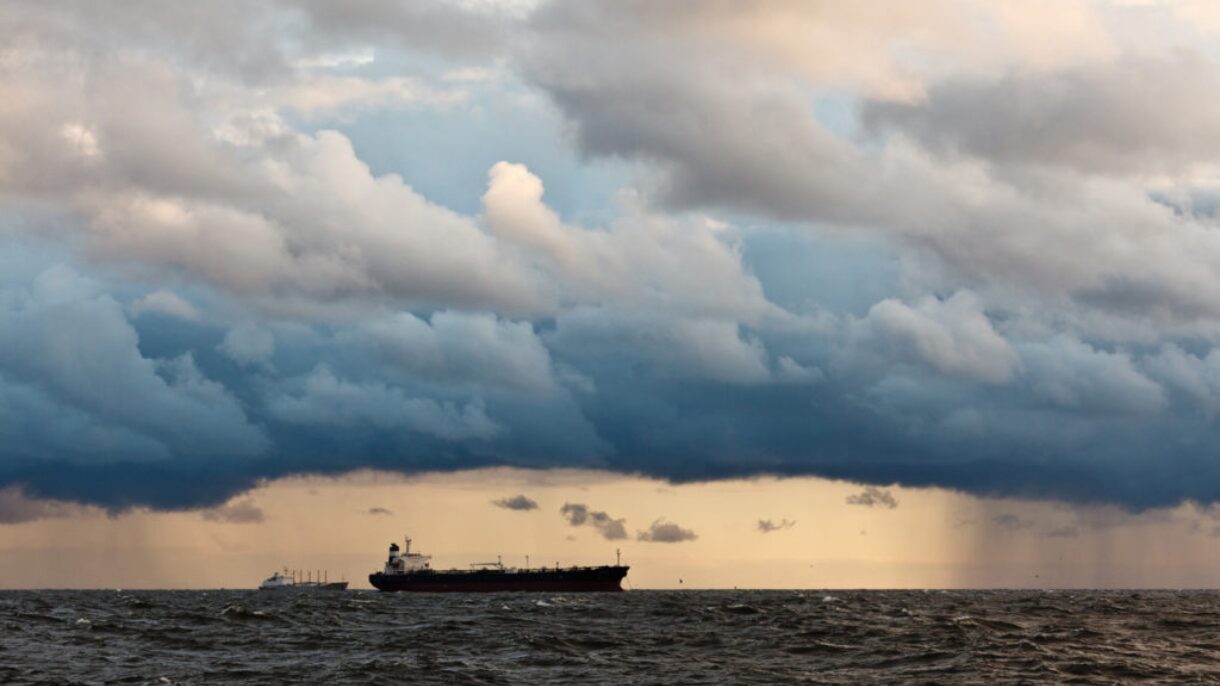
Russia’s war of aggression has brought a shadow fleet to the Gulf of Finland – and thick ice also increases the risk of an oil spill
Writer
Poorly maintained vessels, satellite interference, and attempts to conceal the country of origin of oil have all increased the risk of an oil spill, particularly in the Gulf of Finland. Prevention, monitoring, and an immediate response in the event of an accident are crucial, as removing oil from shorelines is an extremely slow and difficult process.
Let’s begin with the worst-case scenario:
An old, uninsured ship in a state of disrepair is transporting crude oil in stormy weather in the Gulf of Finland. The crew are unfamiliar with the area. Their satellite navigation is imprecise due to interference, and they fail to notice the rocks. Two tanks of oil – thirty thousand cubic metres – empty into the sea. The destruction is massive. The gales make it impossible to recover the oil, which mixes with the seawater.
Fortunately, a horrific scenario like this has not occurred for a long time. Unfortunately, however, the risk of such a scenario has increased. More than 250 million tonnes of oil travel through the 17 largest oil ports in the Baltic Sea each year. The Gulf of Finland is a critical route for Russian oil, which is currently transported by what is known as a shadow fleet of ships, which are now in an even worse condition than in previous years.
The risk of an accident is exceptionally high
Due to Russia’s war of aggression in Ukraine and the subsequent sanctions imposed on Russia, few tankers transporting Russian oil are covered by western insurance. Instead, Russia has scraped together some of the oldest and most dilapidated vessels available on the global markets. Russia is also interfering with satellite navigation, which makes the Gulf of Finland difficult to navigate.
“Additionally, there are attempts to obscure the origin of Russian oil [to circumvent sanctions], so the vessels manipulate the automatic identification system so that it is not immediately apparent that their oil is from Russia. All of these factors combined increase the risk of an incident,” explains maritime safety specialist Petteri Salli from the Finnish Border Guard.

Authorities on high alert
There is, however, a positive side to the situation: although the Gulf of Finland has seen some close calls in recent years, we have managed to avoid a major oil spill.
Furthermore, countries in the region are prepared: traffic in the Baltic Sea is carefully monitored, and oil spill response drills are carried out.
“Authorities in all Baltic Sea countries, including in Russia, strive to prevent accidents from occurring. I don’t believe it would be in Russia’s interests either for an accident to disrupt oil transportation.”
Salli explains that supervisory authorities in Finland and Estonia are quick to reach for their radios if they detect a vessel deviating from its route.
Thick winter ice increases the risk of an accident
In Finland, responsibility for responding to oil spills in the open sea lies with the Finnish Border Guard, while oil spills along the coast are handled by regional rescue departments. If an accident occurs, it is crucial to act quickly and close to the source of the damage. Oil can be prevented from spreading by using booms, and collected mechanically using brush skimmers.
The weather and season also affect the response to an oil spill. It is extremely difficult to respond to an oil spill in very cold winters, when the sea is frozen over in many places. Collecting oil is slower and less effective in winter than it is in summer. Finland has collaborated with other Nordic countries to develop oil spill response methods for icy conditions.
Ice also increases the risk of an accident.
“Ships travel through channels opened up by icebreakers. Ships sometimes collide, which damages their hulls and causes leaks. This winter, we saw cases where ships became stuck in the ice and drifted along with an ice floe. If a ship cannot be freed from the ice floe quickly, there is a risk that it will float towards rocks along with the ice and become damaged. This can result in oil mixing with ice in the sea in wintry conditions,” Salli says.
Prevention is overwhelmingly the cheapest and most effective way to prevent oil spills
Post-spill responses and clean-up operations are at least ten times more costly than preparedness measures. The same applies to recovery: the more quickly we respond, the easier and more affordable recovery is.
“If a ship has run aground and is leaking oil, we have a rule of thumb: if the oil can be pumped from one vessel to another to prevent it from spilling into the sea, it costs one unit. If we have to recover oil from the sea, it costs 10 units. If oil spills onto the shore, it costs one hundred units.
In practice, the last scenario can cost up to one million euros every 24 hours.
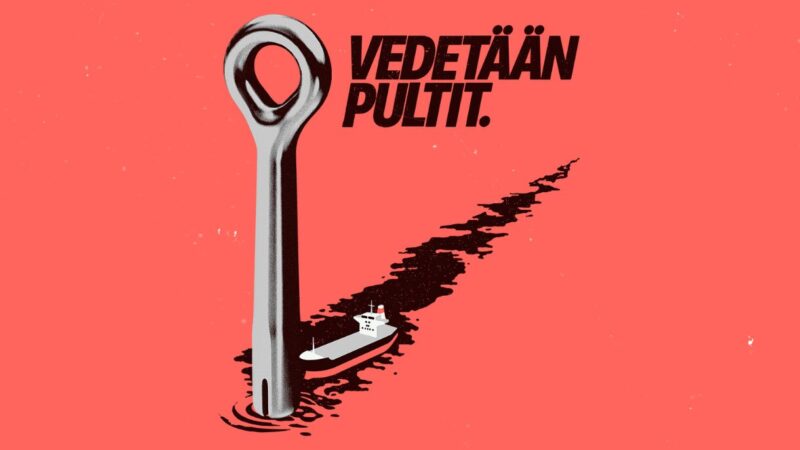
Rock eye bolts allow oil containment booms to be quickly attached to protect vulnerable natural sites along the coast from oil spills.

Bolts for the Baltic Sea
Together with Metsähallitus, the Finnish Border Guard, and the Kymenlaakso rescue department, our foundation has launched the Archipelago oil boom project to build a permanent attachment system for oil containment booms in the eastern Gulf of Finland. In practice, rock eye bolts will be installed in the islands’ rocks to allow oil containment booms to be quickly attached in the event of an oil spill.
The method is simple and cost-effective, and can be used to protect important areas in the Gulf of Finland. The first phase of the project will see rock eye bolts installed along the Finnish coast from Pyhtää to Virolahti.
The area selected for the first phase was chosen because its vulnerable nature is under threat from oil transportation and busy freight traffic. Metsähallitus has identified particularly vulnerable nature sites in the area. Nature sites of priority include seaside meadows, sandy beaches, bird colonies, and nature conservation areas. The bolts will be installed in August 2026 once the nesting season ends.
The project is funded by the “Bolt down for the Baltic sea!”- campaign, which accepts donations from companies and private individuals.

We are building a permanent attachment system for oil containment booms in the eastern Gulf of Finland.
Read more
Bolt down for the Baltic sea!
Russia’s shadow fleet is now operating in record numbers in the Gulf of Finland. The risk of a serious oil accident has risen to an exceptionally high level.
Help us protect the shores of the Baltic Sea by installing bolts required for securing rocky shoreline anchors for oil booms.