

Russia’s “Shadow Fleet” pushes oil spill risk in Gulf of Finland to globally exceptional levels
More information & interview requests:
The risk of a major oil spill in the Gulf of Finland is now exceptionally high by global standards due to Russia’s war of aggression and its shadow fleet. Finnish marine conservation organisation John Nurminen Foundation is leading a pioneering project that installs a permanent protection system to preserve sensitive natural sites.
Severe safety hazards stemming from Russia’s shadow fleet, including its poorly maintained and aging vessels as well as the ambiguous insurance and flag-state arrangements, have been rising the risk of an oil spill in the Baltic Sea to a globally exceptional level. The risk is also increased by satellite navigation (GPS) interference, and deliberate manipulation of automatic identification systems (AIS).
“One new environmental risk in the Gulf of Finland is the risk of drone attacks on Russian oil terminals, ports, and other coastal infrastructure. You could say that the risk of a major oil spill in the Gulf of Finland is high,” says Jukka-Pekka Lumilahti, Director of Rescue Services at the Gulf of Finland Coast Guard.
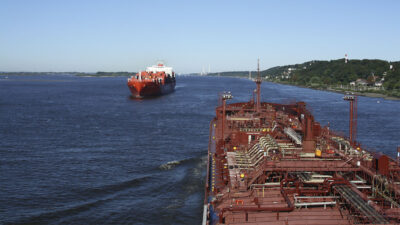
The Gulf of Finland is one of the most heavily trafficked sea areas in the world. Vessel traffic in this shallow, rocky sea area is now, on average, ten times heavier than in the Strait of Hormuz.
According to the Gulf of Finland Coast Guard, 5–6 large, fully loaded oil tankers – each carrying approximately 100,000 cubic meters of crude oil – cross the gulf each day. In addition to this, a high number of other vessels operate in the Gulf of Finland, each of which contains a significant amount of fuel.
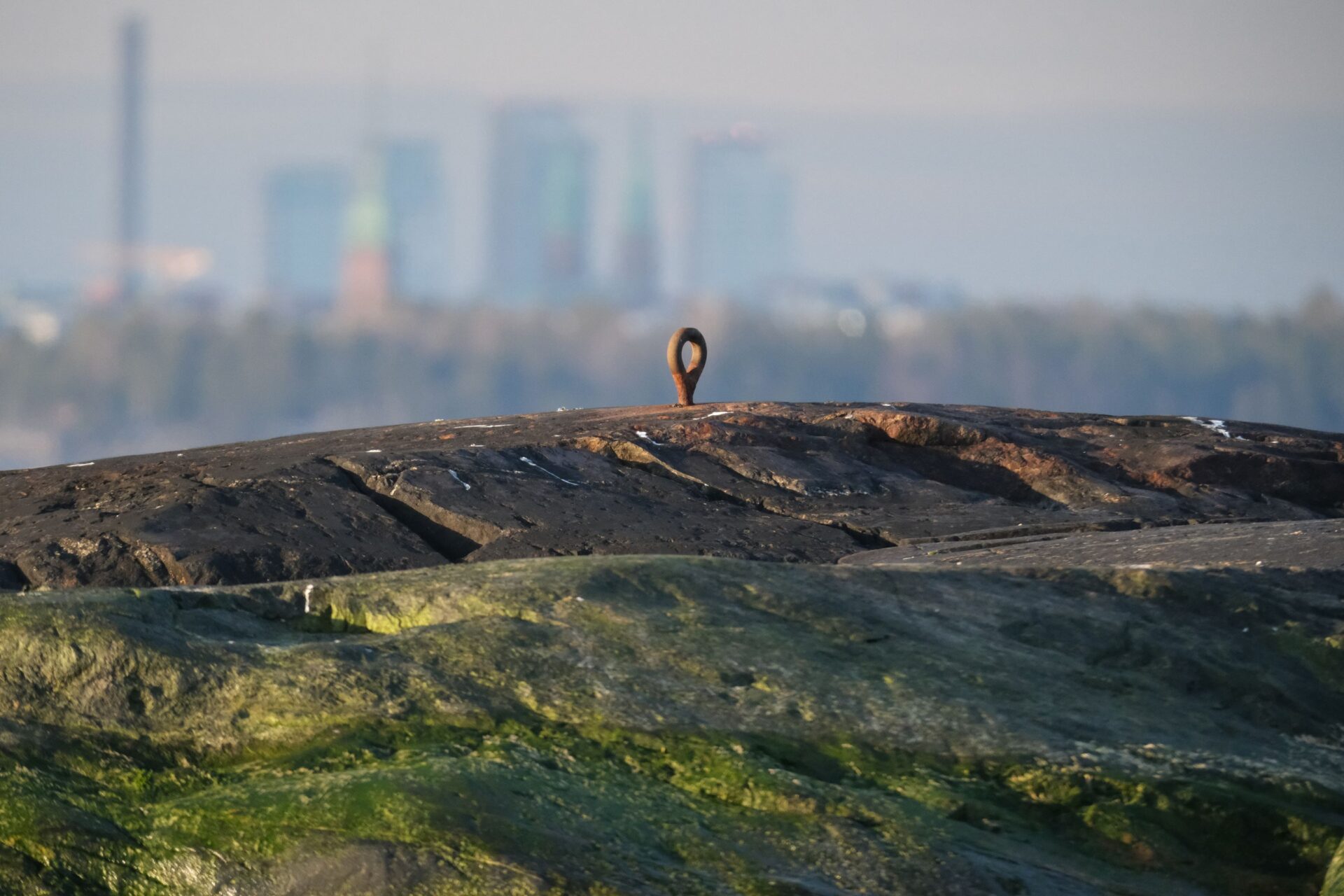
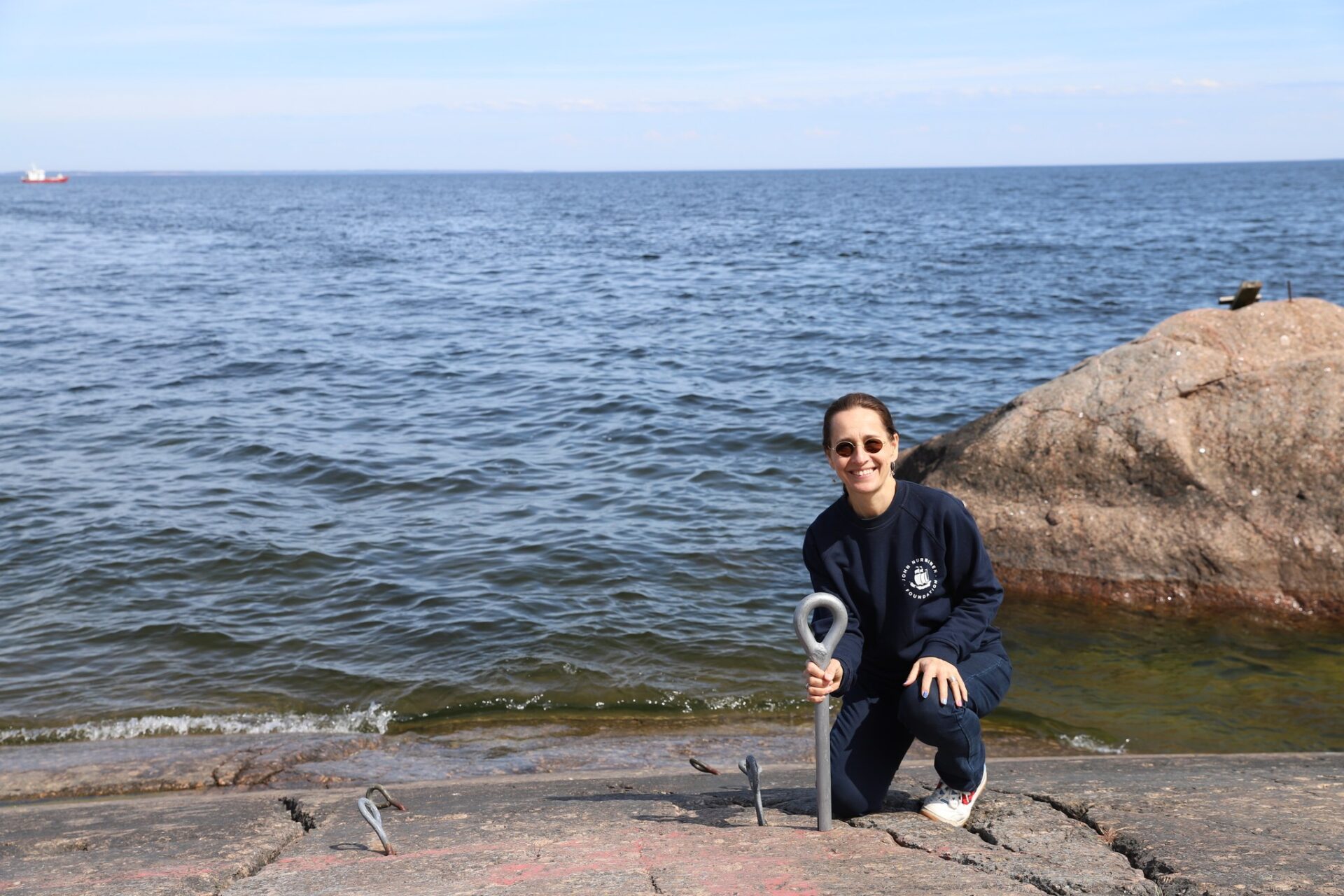
Protecting the coast with 350 mooring rings – drilling is under way
The John Nurminen Foundation, a Finnish marine conservation organisation, has begun to protect the coastline of the eastern Gulf of Finland where proximity to the Russian border makes the oil spill risk most acute. In collaboration with key Finnish authorities – including the Kymenlaakso Rescue Department, the Finnish Border Guard, and the state-owned Metsähallitus Parks & Wildlife Finland – the project is pre-installing a permanent fastening system for oil spill response booms.
“In practice, we are bolting approximately 350 mooring rings directly into the bedrock of the archipelago, to which oil spill response booms can be attached. The fastening system will speed up and significantly enhance authorities’ oil spill response in the event of an incident, because the fastening points are immediately available,” says Ulla Rosenström, Director of Marine Environment at the John Nurminen Foundation.
The objective to protect highly sensitive ecosystems
The Gulf of Finland and its archipelago are an exceptionally rocky and shallow sea area. The islands and coastline of the eastern Gulf of Finland hold vast ecological value, hosting several nature reserves and a national park. The primary objective of the fastening system is to protect highly sensitive natural habitats, including coastal meadows, critical bird nesting islets, and other fragile marine ecosystems.
The method is also highly cost-effective. According to estimates, post-spill clean-up operations are calculated to be at least ten times more expensive than preparedness measures. By deploying containment booms immediately, authorities can prevent oil from reaching private shorelines, cottage shores, and delicate island ecosystems, avoiding long-term damage to nature, public health, and local livelihoods.
Finns are willing to support the coastal protection measures
The John Nurminen Foundation’s work is funded by donations from companies and individual donors. The Foundation raised money for the oil spill protection measures with a marine protection campaign lasting throughout the spring. The campaign has inspired Finns to donate towards protecting the coastline.
“Our surveys show that Finns are concerned about the threat of an oil spill. We are grateful for the Finns’ willingness to defend our sea. Without this support, it would not have been possible to implement the protection measures,” says Ulla Rosenström.
Read More:
Haluatko pysyä kartalla Itämeren tilasta?
Tilaa uutiskirjeemme ja kuulet ensimmäisenä Itämeri-aiheisista tapahtumista, säätiön hankkeiden etenemisestä, merellisistä julkaisuista ja muista kiinnostavista sisällöistä.