Restoring underwater habitats helps combat nature loss
Text
The sixth mass extinction, habitat loss, biodiversity loss – all point to the species depletion caused by humans. The destruction is caused by, among other things, land use, climate change, and pollution. Numerous species, ecosystems and habitats are a prerequisite for life on our planet, both on land and in water. Fortunately, we can repair some of the damage through restoring nature.
Restoration can be done both on land and in water. The goal of restoration is to return habitats that have suffered back to their formal state.
Nature restoration and nature conservation go hand in hand: for the restoration debt not to grow unreasonably large, activities that destroy nature must be altered. Yet, since almost half of the habitats in Finland are classified as endangered, restoration boots or flippers must be put on.
Underwater nature can be restored, for example, by planting species in areas where they have disappeared. Diversity can also be improved by building rocky reefs that support the well-being of marine ecosystems.
On the trail of stone fishing
The Baltic Sea coasts have their own unique characteristics. In some places the seabed is full of stones of different sizes, while in Skåne in southern Sweden the bottom is mainly sand. This is typical of the area, but the lack of stones has also been amplified by historical stone fishing.
“When I first heard about stone fishing, I thought of poisonous stone fish. Of course, that was not the case. Out of curiosity, I decided to do my own research on the matter,” says Jonas Gustafsson, a marine biologist at the Skåne County Administrative Board.
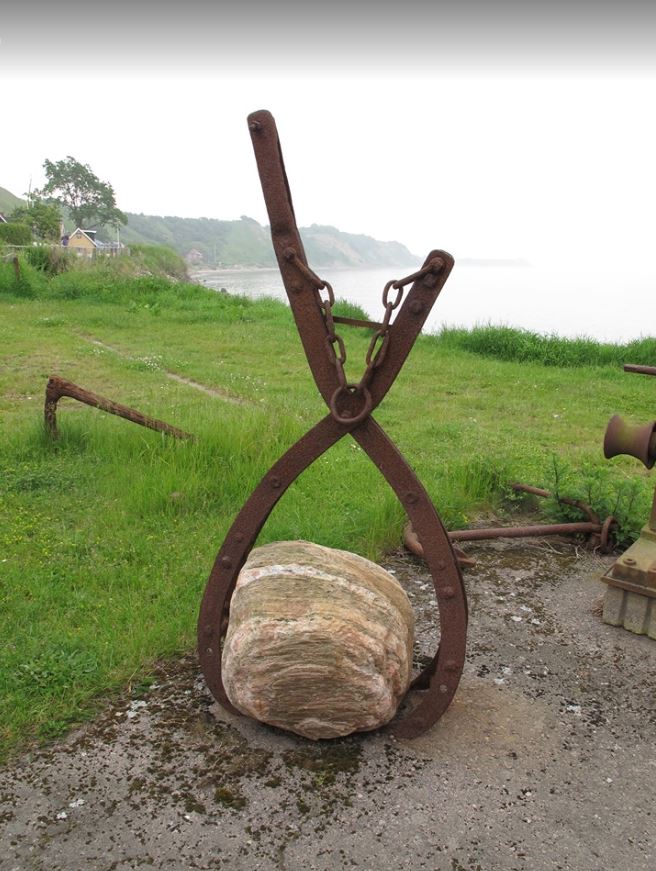
Gustafsson works on the restoration of stone reefs and has on the side studied the history of stone fishing in the Skåne region. A shortage of stone material for construction initially drove locals to the water to get stones.
The oldest sources Gustafsson has found date back to the mid-18th century and describe stone fishing in Sweden and Denmark. In Sweden, the activity declined in the 1970s, as land transport and the use of concrete increased. There was no need to continue with the complex and expensive stone fishing. In Denmark, fishing was only banned in 2010.
Rocks were fished for various construction purposes, such as for piers and breakwaters, as well as for the construction of fortresses, houses and roads.
Unfortunately, stone fishing has had a detrimental effect on marine life: stones play important roles in marine ecosystems. Some species, such as algae, need rocks to grow, while others use them to hide and find food.
“Stone fishing has an impact on entire ecosystems. If there are small fish in the sea that benefit from stone reefs, there will be more cod that eat them. Cod, in turn, attracts seals and porpoises, for example, which eat mussels and fish,” explains Gustafsson.
Luckily, stone reefs can be restored to support biodiversity.
Gustafsson points out that creating stone reefs is not just about throwing rocks into the sea – the ultimate goals are often more complex. Things to consider when building stone reefs include height variations and the number of different crevices. The construction method can influence which species particularly benefit from the reef.
Baltic Sea’s swaying forests
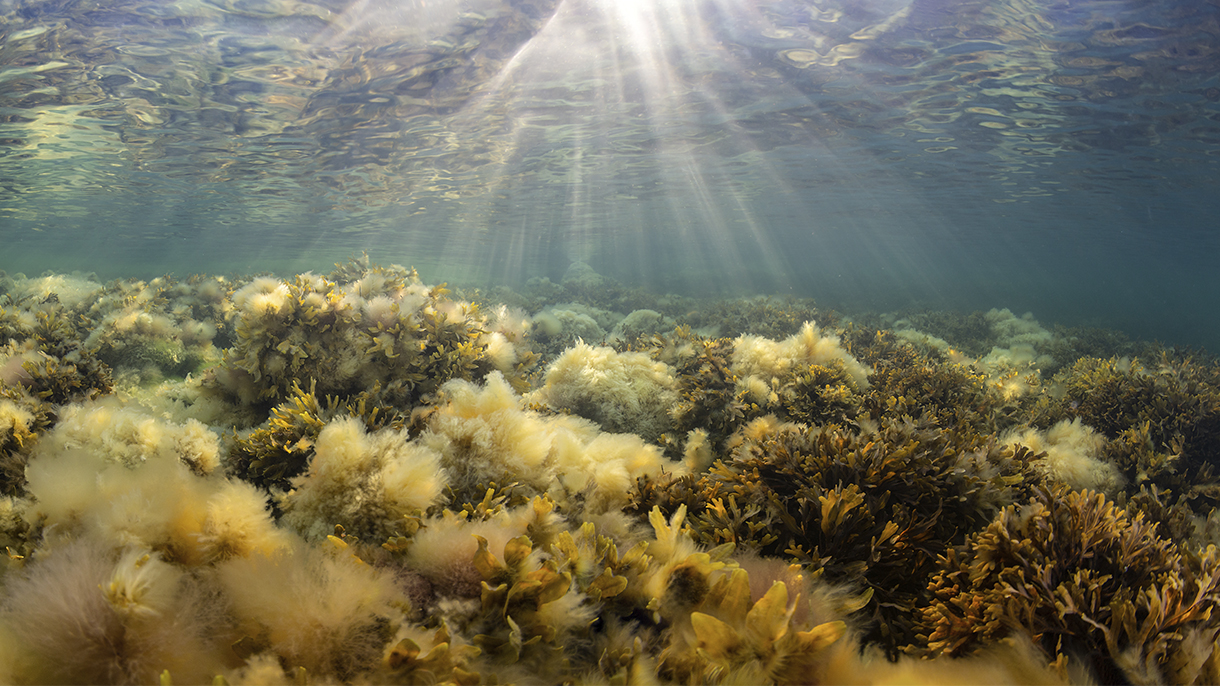
If you could hear humming beneath the Baltic Sea surface, the sound would come from the golden-brown forests of bladderwrack. Bladderwrack is a brown seaweed, an important species for biodiversity in the Baltic Sea.
However, bladderwrack suffers from eutrophication: excessive nutrients in the water feed filamentous algae, which cover and suffocate the bladderwrack. Turbid water also narrows the suitable growth area for bladderwrack. Reducing the excessive nutrient load in the Baltic Sea can improve the growth conditions for bladderwrack.
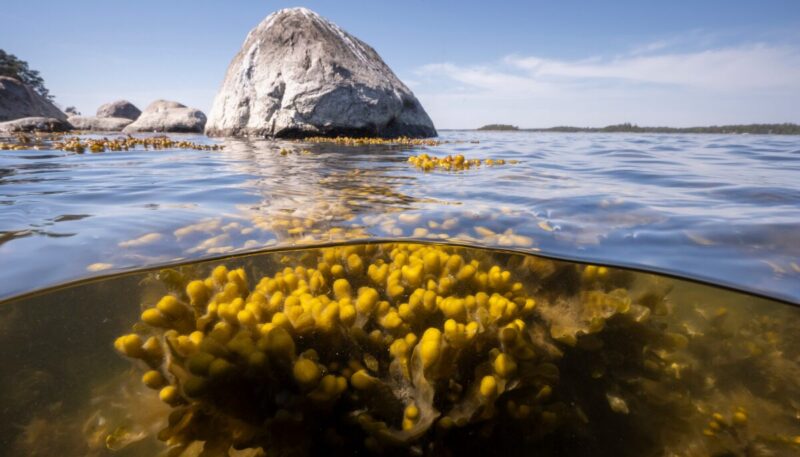
“The biggest problem in the Baltic Sea is eutrophication. In general, addressing the root causes of the species’ disappearance is a prerequisite for worthwhile and successful restoration measures. In the Baltic Sea, this means cutting the nutrient load that burdens the sea, primarily from agriculture and forestry”, says Miina Mäki, Head of Programme at John Nurminen Foundation.
In addition to reducing eutrophication, bladderwrack can be helped by restoring its habitats. The success of restoration measures is affected in particular by the availability of light, the salinity of the water and the suitability of the growing substrate.
“In our Sea Too project, we are promoting the growth conditions of bladderwrack by cleaning the stones that serve as their growth substrates. After that we bring adult individuals into the water near the stones. Then we hope that the ‘young’ will land and attach to the cleaned stones,” explains Mäki.
The sexual reproduction of bladderwrack follows the lunar cycle, which also affects the timing of restoration measures. Bladderwrack is planted in spring and summer before the full or new moon, when the bladderwracks mate. Bladderwrack originates from the ocean, where the tidal phenomenon that follows the phases of the moon has influenced the its spreading.
Bustling meadows
If bladderwort forms forests in the Baltic Sea, eelgrass forms underwater meadows. Unlike bladderwrack that grows on rocky bottoms, eelgrass meadows spread over sandy bottoms, binding bottom sediments with its roots. The meadows bind nutrients from the water and, in the southern parts of the Baltic Sea, also carbon.
Like bladderwrack, eelgrass suffers from eutrophication, which makes the water turbid and results in insufficient light for growth. In addition, filamentous algae take up space from eelgrass.
Eelgrass meadows are restored by transplanting eelgrass cuttings to a location with favorable growing conditions – often to areas where the species has previously grown. The idea is that the eelgrass will spread in the area after planting.
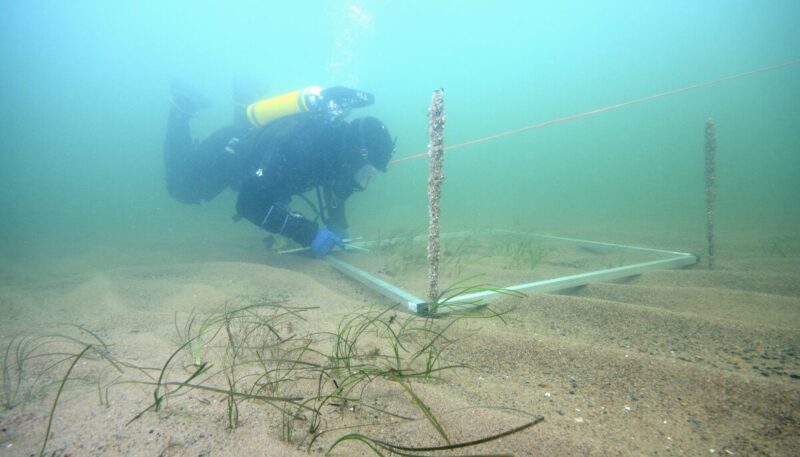
“Cuttings can be taken from nearby meadows that are not negatively affected by the collection. Replanting should be done as soon as possible to improve the chances of survival,” says Mäki.
Thriving eelgrass meadows are teeming with life: the densely growing meadows provide shelter for small fish, for example, and are home to various shellfish and crustaceans. Other plant species also grow in the meadows.
Restoration is worthwhile
Restoration is guided by international and national goals. Finland is currently preparing a national restoration plan that will meet the restoration goals set by the European Union. The goals are defined in the Restoration Regulation, which states that at least 20 percent of the Union’s land and sea area should be covered by actions that improve the state of nature by 2030.
The results of underwater restoration efforts have been encouraging, and more is being learned about restoration all the time. Although the actions have a price tag, restoration is important not only for nature but also for human well-being.
Restoration can help nature that has been weakened or destroyed by human activity. It is an investment in the future well-being of our planet.
The John Nurminen Foundation’s Sea Too project restores habitats important for the biodiversity of the Baltic Sea, such as seagrass meadows, bladderwrack beds, and stone reefs. At the same time, the project strengthens the relationship between humans and the sea through science and art.
The project is co-funded by Baltic Sea Conservation Foundation.
We prevent the loss of nature in the Baltic Sea by restoring underwater habitats and promoting sustainable use of marine resources. Read more!