ACWA LIFE
Thriving waters strengthen biodiversity and aid adaptation to extreme weather phenomena caused by climate change. The ACWA LIFE (Actions for Waters from Source to Sea) project is improving the state of Finnish waters through extensive nationwide cooperation. Measures are being planned not only for the waters, but for the Baltic Sea’s entire catchment area, from which waters drain into the sea. Measures will be targeted where they will have the greatest impact on the state of the waters. With a budget of almost EUR 28 million, the ACWA LIFE project is one of the most significant projects in the history of water resources management in Finland.


More information
Eeva Tähtikarhu
Head of programme, Clean maritime transport eeva.tahtikarhu@jnfoundation.fi +358 50 314 2102Activity that takes place on land and coasts, from agriculture and forestry to cities and ports, all affects the cleanliness and vitality of waters. Nutrients, solids, chemicals and waste all wash into the waters from land. A catchment area is an area of land where water drains downhill, washing material into the waters with it.
The Baltic Sea’s catchment area is around four times the size of the sea’s surface area. Almost all waters in Finland, from small streams to rivers and lakes, ultimately drain into the Baltic Sea. All of these waters are affected by what takes place on land: how land is cultivated, how forests are managed, and how wastewater is processed.
One challenge that there is no single solution or decision-maker in reducing the load on the waters. We need collaboration that transcends administrative borders and brings together different industries and actors, from national bodies to organisations and foundations.
The ACWA LIFE project responds to this need. The eight-year national project is overseeing the implementation of measures in five different demo areas (see map below) that represent different environmental conditions. The areas will serve as models for planning and action in catchment areas to improve the state of the waters. A total of fourteen partners are working on the project from the public, private, and third sectors. Measures are carried out in close collaboration with owners of land and water areas.
The ACWA LIFE project’s demo areas are: the Laihianjoki river in South Ostrobothnia, the Temmesjoki river in North Ostrobothnia, Mynälahti bay in Southwest Finland, the Porvoonjoki river in Uusimaa, and the Virtasalmi-Joroinen fisheries region in North Savo.
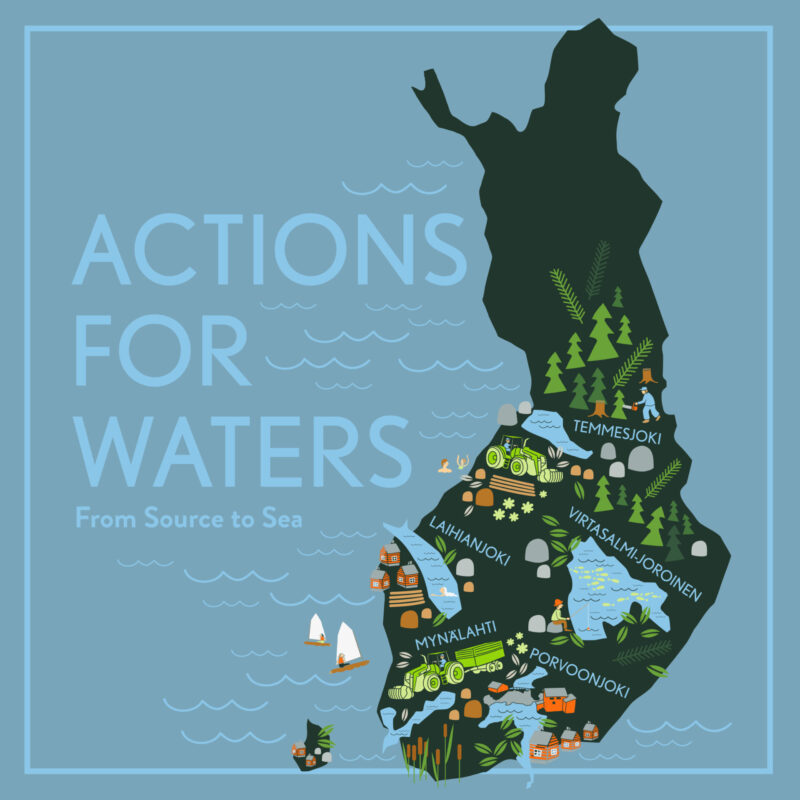
Conservation measures from source to sea
In the project, the John Nurminen Foundation is coordinating and implementing measures to prevent and reduce the load on the waters from land. The objective of the package of measures is to reduce the adverse impacts from human activity on waters, such as nutrients, hazardous chemicals, microplastics and other pollution entering inland waters and the sea. Measures are carried out in close collaboration with local communities and landowners in all demo areas, and in hotspots outside of demo areas, such as ports. The effectiveness of the measures will be followed and monitored, and proven good practices will be disseminated.
Reducing cargo residues at ports
Finnish ports handle vast quantities of bulk cargo such as fertilisers, feed, coal, and refined metals on a daily basis. When loading and unloading ships, bulk cargo is prone to spreading into the environment. Nutrients that contribute to eutrophication and hazardous substances like heavy metals can end up in the sea along with cargo residues. Various technical solutions and investment in the careful handling of loads and cleanliness in loading areas can prevent cargo residues from ending up in the sea.
We collaborate with all major Finnish ports and port operators that handle bulk cargo to develop and implement methods to reduce waste. Another goal is to develop better load monitoring methods for ports and to improve the opportunities to receive washing water from ships at ports. The measures aim to achieve significant reductions in nutrient load and hazardous substances.
Materials (in Finnish)
Reducing the nutrient load from agriculture
The greatest nutrient loads on the Baltic Sea are caused by agriculture. A particular challenge in Finland is that animal and crop production are strongly concentrated in different areas. In animal production, fertiliser quantities exceed demand, which increases nutrient run-off into waters. Crop fields, however, require more nutrients. In the ACWA LIFE project, we’re developing the management of nutrients in manure and implementing the collection of nutrients from farms with excess nutrients for crop production on farms which have a shortage of nutrients. The aim is for this to reduce the load that ends up in the Baltic Sea.
In agriculture, we are also testing new methods to reduce nutrient load. Treating fields with gypsum has proven to be an effective way to reduce the nutrient load and solids that end up in waters. The gypsum binds phosphorus to the soil and improves the soil’s crumb structure. The ACWA LIFE project is piloting gypsum treatment on peatland: if the method proves effective, it will be promoted on a field scale.
The John Nurminen Foundation is also piloting the use of subsurface drainage water to conduct water to field buffer zones. This aims to direct water to be filtered in the buffer zone rather than flowing directly into the ditch.
Protecting waters in forestry
In forestry, we are reducing the nutrient and humus load on bodies of water and promoting the adoption and implementation of proven good practices. In Finland, extensive areas of swamp and peatland have been dried out for timber production using ditches. The ditches transport nutrients and humus from the forests to inland waters and, ultimately, to the Baltic Sea.
The ACWA LIFE project will see water from forests directed to natural or rehabilitated swamps for purification. Returning the water will benefit waters and improve natural diversity.
Managing stormwater
In urban areas, hazardous substances like microplastics and nutrients end up in waterways along with stormwater. In the project, we’re testing various filtration methods to remove hazardous substances from stormwater. The aim is to introduce the new methods in other areas of Finland and create national recommendations for stormwater management while the project is still ongoing.
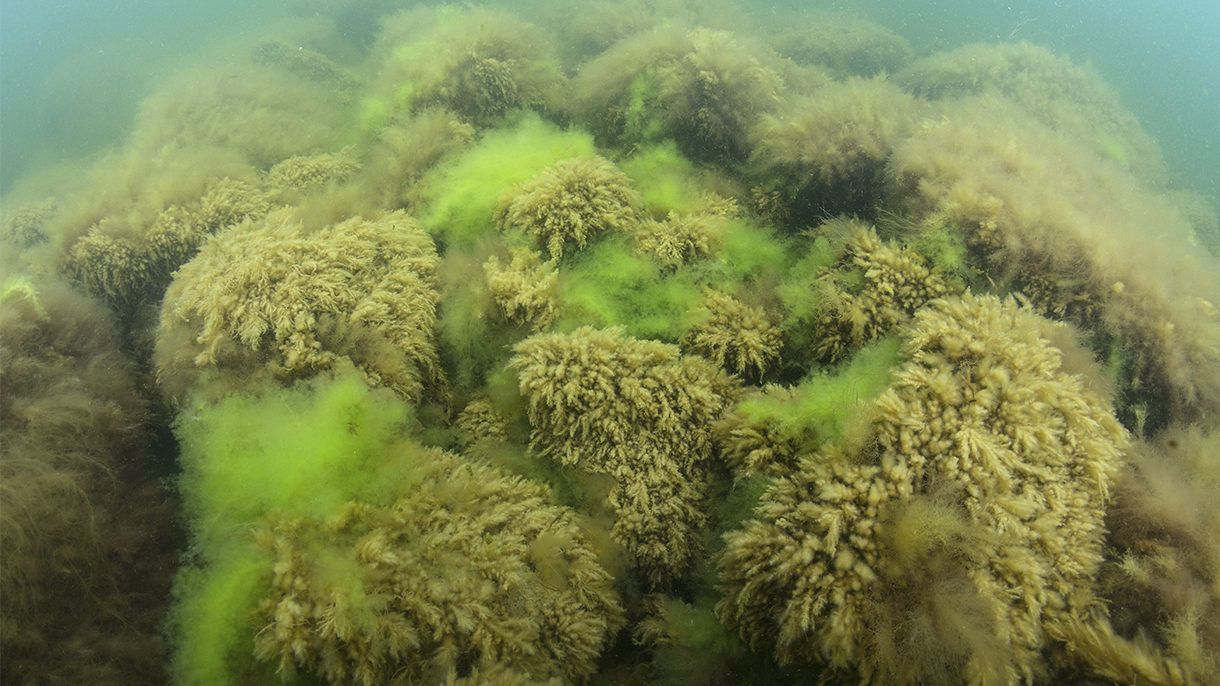
Rehabilitating bays
John Nurmisen Säätiö toteuttaa hankkeessa toimia myös rehevöityneiden merenlahtien kunnostamiseksi ja meren sisäisen kuormituksen vähentämiseksi. Sisäisellä kuormituksella tarkoitetaan meren pohjaan sitoutuneita ravinteita, joita vapautuu takaisin veteen. Hankkeessa sisäistä kuormitusta vähennetään testaamalla merenpohjien alumiinikäsittelyä yhteistyössä Lounais-Suomen Elinvoimakeskuksen kanssa. Ravinteiden sitomiseen tähtäävää alumiinikäsittelyä on käytetty toistaiseksi pääasiassa järvissä. Lisäksi hankkeessa kartoitetaan muiden menetelmien testausta.
ACWA LIFE projects is co-funded by the EU