

Ilmari Käihkö: The Baltic Sea as a stage for war

Writer

Ilmari Käihkö
Associate Professor of War Studies
Russia’s war of aggression against Ukraine has changed the security environment in the Baltic Sea region and made military threats more visible than before. In the foreword to the recently published The Story of the Baltic Sea, Associate Professor of War Studies Ilmari Käihkö examines the impact of the war on the Baltic Sea and reminds us that the sea should not be defended by military means alone: protecting it from environmental threats is a shared responsibility.
Historically speaking, seas have been a source of wealth and interaction but also of potential threat. Even though, on a map, a sea may appear as an obstacle, in reality it is a uniting factor that increases interaction. The openness of the sea provides a channel for interaction that amplifies both prosperity and threats.
Because of its small size, this applies particularly well to our Baltic Sea. It ties together the destinies of not only its nine coastal states, but also those of more than 90 million people that live in its catchment area, which is almost three times the size of the Baltic.
As usual in international politics, over the course of history the focus of regional interaction has shifted between cooperation enhancing prosperity and conflicts causing threats. In her book The Story of the Baltic Sea, Marjo T. Nurminen tells us how times of conflict have been more common than cooperation in the Baltic Sea area. However, the end of the Cold War was followed by an era of concord. It increased maritime traffic on the Baltic Sea and made the region more industrialised.
Enhanced interaction generated prosperity but increasingly exposed the Baltic to environmental problems. Cooperation enabled to protect the world’s most eutrophic sea area.
The story of the Baltic Sea took a new turn in February 2022 when Russia launched its large-scale war of aggression against Ukraine.
The war is the biggest to be fought in Europe since the Second World War. Its impacts extend to the Baltic Sea – a maritime area some people started calling the NATO lake, since Finland and Sweden joined the North Atlantic Alliance.
The name is an exaggeration even though all other coastal states around the Baltic except Russia belong to NATO and support Ukraine – which by the way is also connected to the Baltic Sea through a tributary of the Vistula. However, the idea of a NATO lake effectively reflects the forms of military cooperation that have emerged in the Baltic area.
Above all, the name aptly underscores the dangers now regarded as more imminent that have overshadowed the long-term environmental threats that concern all Baltic area states. After Russia invaded Ukraine, maps of the Baltic Sea describing the ranges of different weapon systems and underwater infrastructures prone to sabotage became more common.
War not only weakens environmental protection but also creates environmental threats.
The Baltic Sea constitutes the primary transport route of Russian energy to Europe. Russia tries to evade energy sanctions posed by Western countries by using old tankers belonging to what is called the Russian shadow fleet.
The use of tankers with poor insurance cover or none at all led to concerns of sabotage and environmental accidents on the Baltic Sea. The latter could not be avoided after the war spread to the Russian ports on the Baltic that are specialised in exporting oil and natural gas.
In times of war, the environment often suffers irreversible damage, although this is eventually harmful to all of us.
Even though the war has put an end to the era of concord, we can harness the cooperation that has ensued from it for promoting environmental protection. We have no alternative. Since the Baltic Sea cannot defend itself, the responsibility for defending it lies with us, humans – in times of both peace and war.
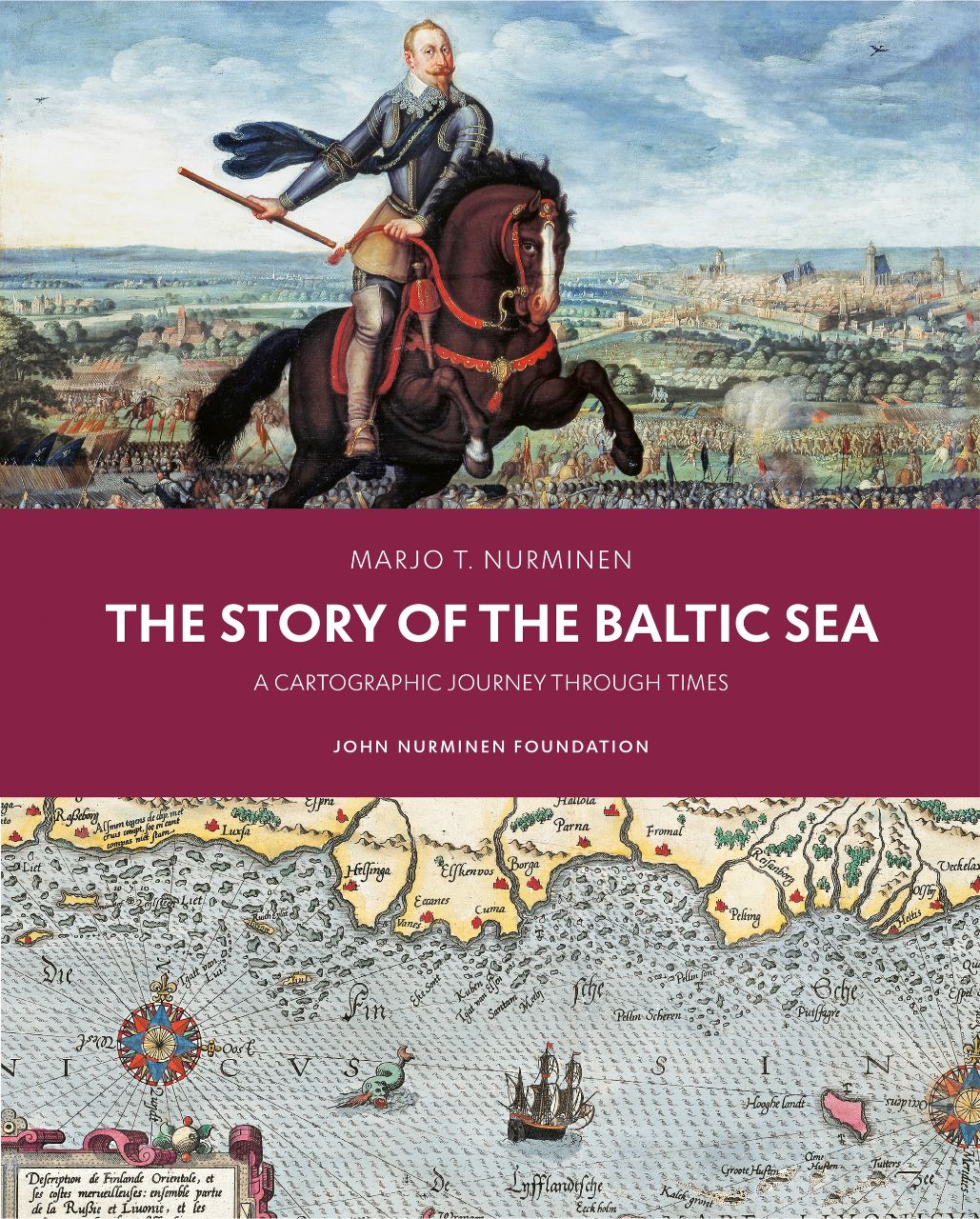
Ilmari Käihkö’s blog post was originally published as the foreword to The Story of the Baltic Sea – A Cartographic Journey through Times. An English edition of the book was published in September 2026, alongside a revised Finnish edition.
The Story of the Baltic Sea
The Story of the Baltic Sea brings together a carefully curated selection of historically significant maps alongside contemporary maps. The book explores how maps have not only conveyed information but also shaped perceptions of the Baltic Sea and the people living along its shores, from the Viking Age to the present day. In addition to geography, the old maps tell the story of seafaring, trade and warfare, while also offering an intriguing reflection of the history of power politics, the spread of information and propaganda.
Read next

We are building a permanent attachment system for oil containment booms in the eastern Gulf of Finland.