Lessons from the UN Ocean Conference in Nice
Writer
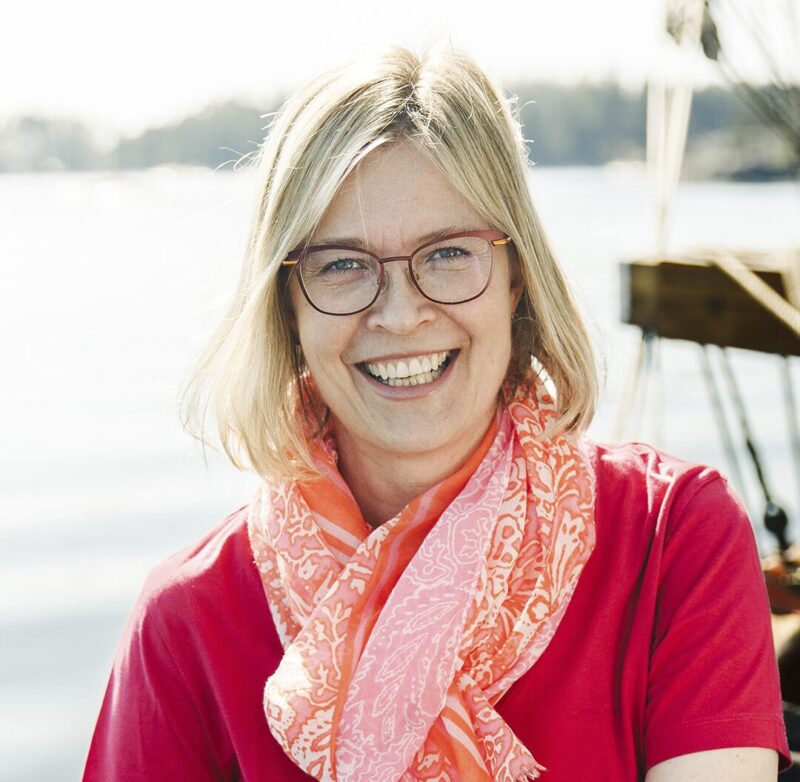
Discussions about protecting the seas are becoming increasingly ambitious — but how do we bridge the gap between goals and available funding? Voluntary efforts alone are not enough as environmental crises accelerate. A sustainable blue economy and stronger conservation measures are essential, writes Annamari Arrakoski-Engardt, CEO of the John Nurminen Foundation.
International marine conservation, saving the Baltic Sea and the Third UN Ocean Conference (UNOC3), which was held in Nice this year, are united by similar themes: ambitious goals and their monitoring, adequate funding, and a balance between voluntary action and regulation. Current challenges in marine conservation include funding that is insufficient to achieve the targets, a lack of sanctions, and a strong emphasis on voluntary action. The UN conference laid the aforementioned issues on the table: the Sustainable Development Goal (SDG 14) related to seas, oceans and marine resources is still the least funded of all the Goals.
However, the Nice conference can still be considered a success, as it put the importance of the world’s seas and oceans on the international government agenda and promoted a number of international agreements, such as the High Seas Treaty. The conference also boosted fundraising by discussing finances from the perspectives of the blue economy, sustainability, the green transition and our shared future. It highlighted the role that companies, cities, science and the third sector play as critical resources for marine conservation.
Companies can only develop responsible and sustainable products, services and circular economies if they have knowledge and understanding of marine ecosystems coupled with sufficient funding. There is still a challenge in reconciling funding, skills and needs – the right ideas, operators and funders do not always find each other.
Surprisingly, some of our Foundation’s marine conservation activities can be considered to be part of the blue economy, even though we have not been a commercial party in the value chains that we have helped to build. Ten years ago, we launched a local fishing project that commercialised management fishing. The Baltic Reed project has mowed common reeds growing along shorelines, and has also explored different processing paths for this biomass in the packaging, construction and substrate sectors in particular.
These and other examples of our work were presented to German parliamentary representatives and marine conservation professionals in Berlin in September. The blue economy is an area that has not yet been seriously addressed in the context of stimulating economic growth. Inspired by examples from the Nordic countries, Germany intends to invest in a sustainable blue economy. In view of the promises made at the Nice conference, it would be excellent for marine conservation if Central Europe were to begin promoting a sustainable blue economy.
In addition to business and finance, discussions in Nice also raised the point that marine conservation and climate change mitigation should be addressed together, not separately as they are now. The importance of seas and oceans as carbon sinks cannot be overemphasised, so separating these themes is artificial, and especially in terms of protecting biodiversity. The UN’s goal to prevent biodiversity loss by protecting 30 per cent of the world’s land areas, inland waters and sea areas by 2030 has increased the number of conservation zones. One common goal was not to continue with business as usual, but rather to halt biodiversity loss and, to some extent, also the climate crisis. There were also discussions about the level of biodiversity in areas that are either already protected or earmarked for protection. If an area is already suffering from biodiversity loss, it is important to first restore it and then protect it. Land and sea areas with a high level of biodiversity should be protected as strictly as possible.
The enthusiasm shown this summer should lead to stronger, science-based action for restoration and conservation. This is the work that we are doing in our projects to restore peatland areas to their natural state as mires and wetlands, and to plant eelgrass in southern Sweden and along the Finnish coast.
International collaboration can only achieve results if the objectives are consistently monitored, and if the policies and regulations that support them take a long-term approach to promoting conservation and sustainable business practices. We have been eating up the Earth’s resources slowly but surely. We have weakened its resilience, and are now pushing our planet to its limits. So we must – equally surely, but more quickly – restore, save and sustainably build our ecosystems while we still can.
The article was first published in the John Nurminen Foundation’s Telegrammi magazine (2/2025).