

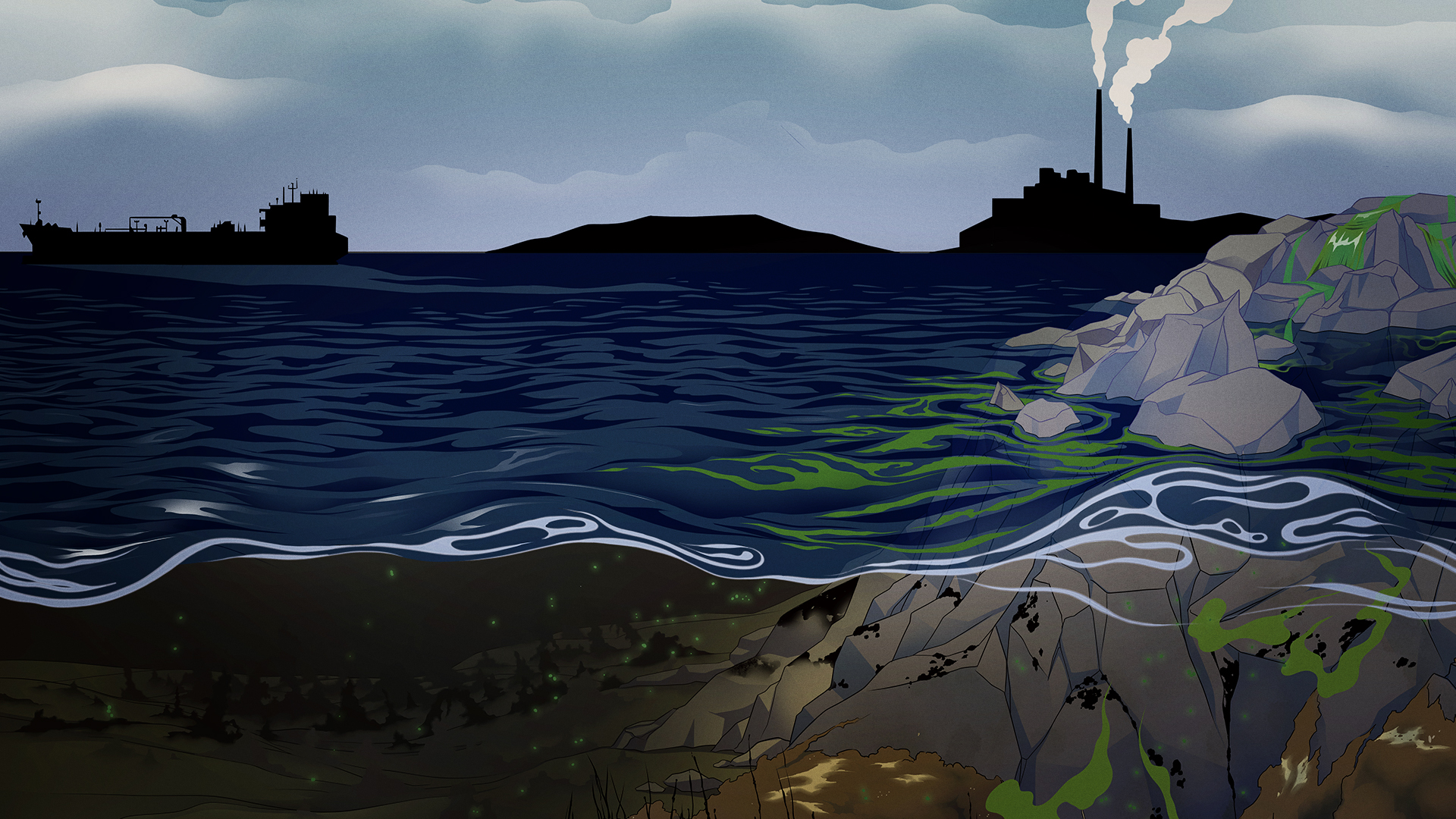

There are already so many man-made wonders in the sea that nature is being forced aside. The Baltic Sea does not need miracles, it needs work.
Donate to the rescue efforts and help fight biodiversity loss
Baltic Sea’s seven human-made wonders of nature
There are many well-known natural wonders in the world, such as the Northern Lights, the Grand Canyon, and Victoria Falls. UNESCO has also selected seven man-made wonders (the 7 Wonders of the World), which include, for example, the Great Wall of China, Machu Picchu, and the Colosseum.
John Nurminen Foundation now presents seven human-made wonders of the Baltic driving biodiversity loss.
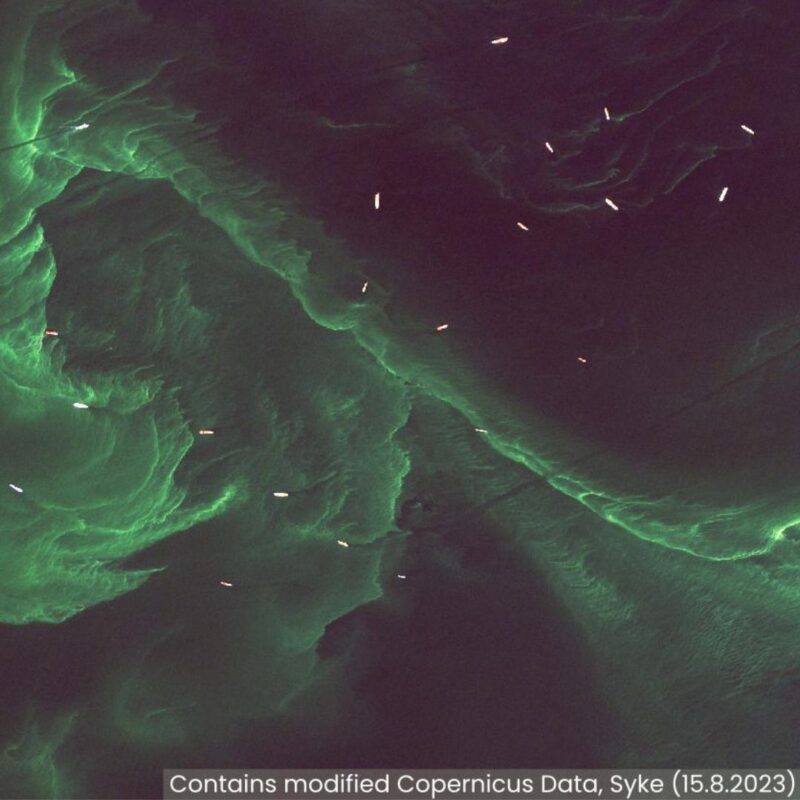
Northern Plights – algae blooms that resemble the Northern Lights
The Baltic’s own “northern plights” can look like the Aurora Borealis when photographed from above, but in reality these algae blooms signal eutrophication..
(Photo: SYKE Tarkka-service. Contains modified Copernicus-data)
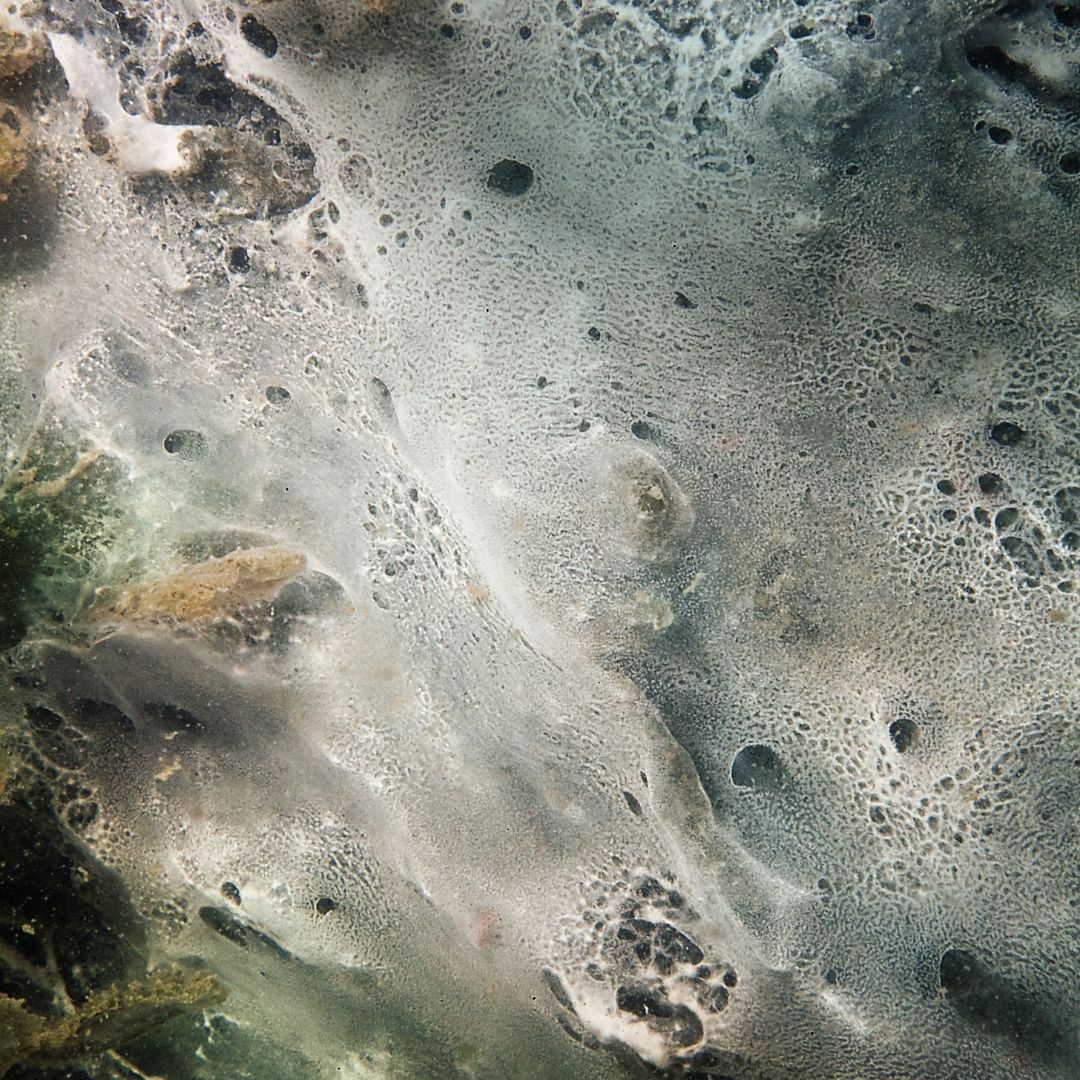
Rock Bottom – an anoxic area the size of Denmark on the seabed
The deep basins of the Baltic Sea experience recurring oxygen depletion, made worse by eutrophication. Practically nothing can survive on an oxygen-depleted seabed.
(Photo: Pekka Tuuri)
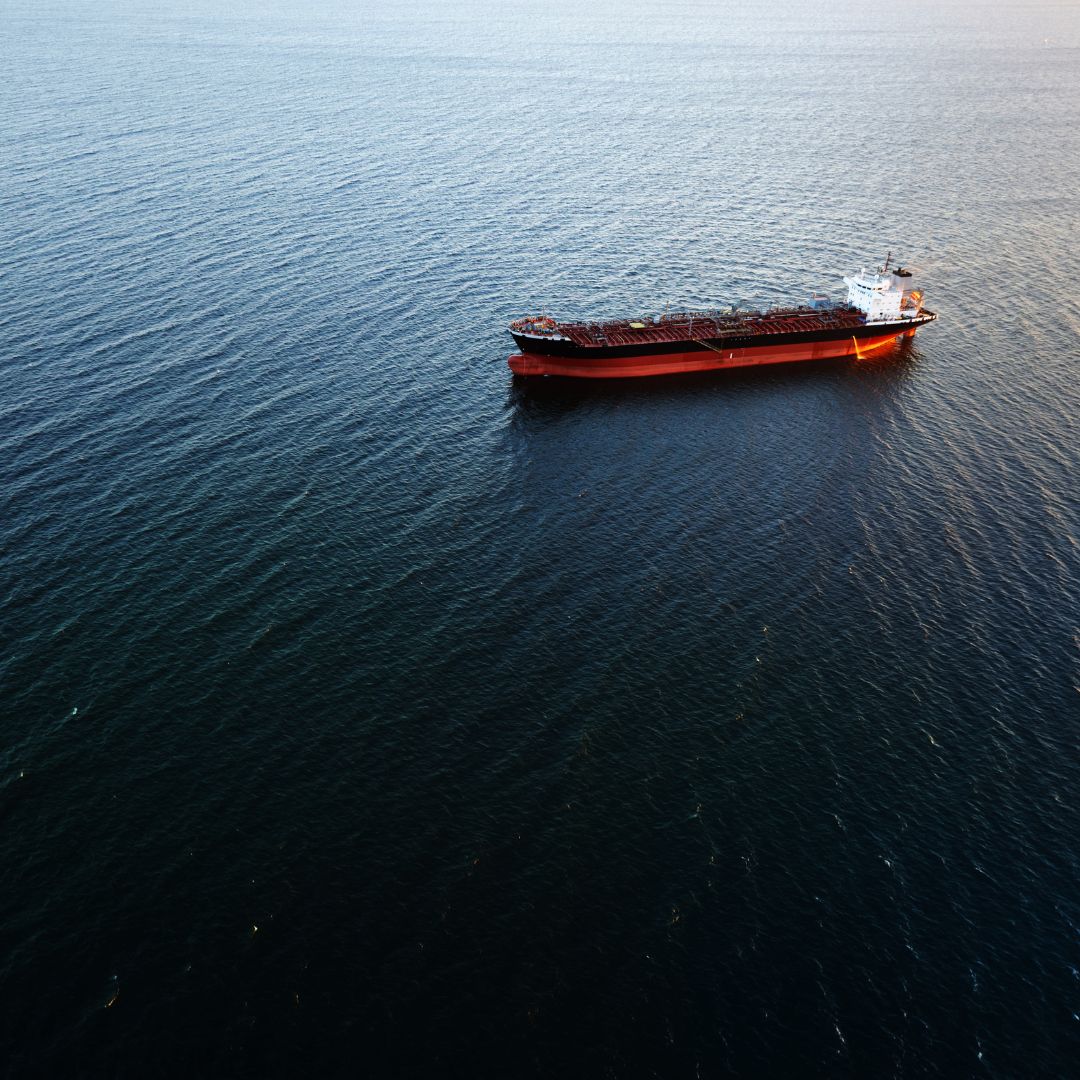
Chemical Falls – the cocktail of chemicals flowing into the sea
Harmful and toxic substances enter the sea through human activity — from maritime traffic, ports, industry, pesticides, and wastewater.
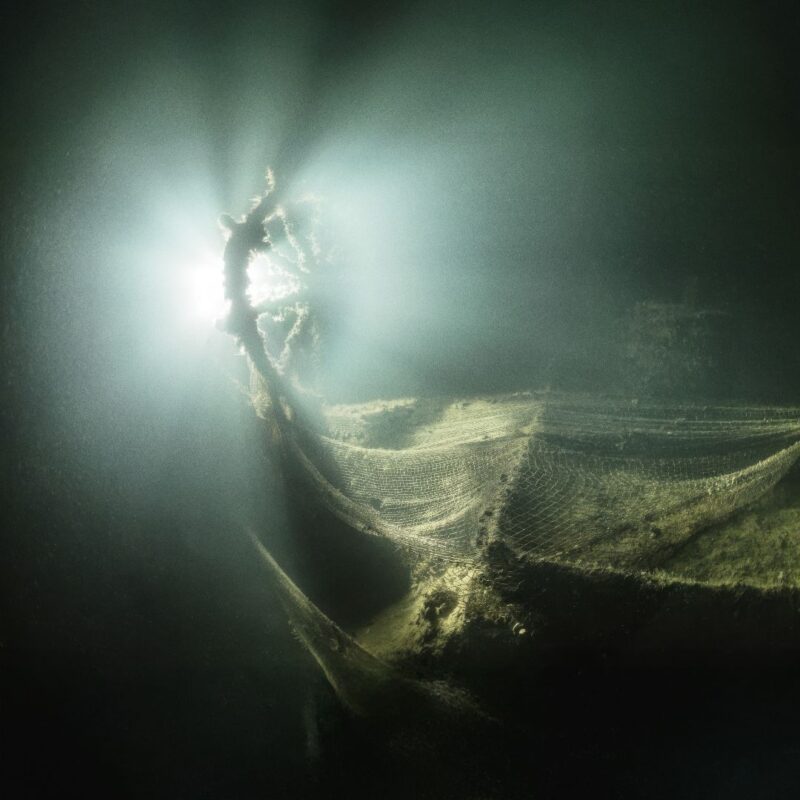
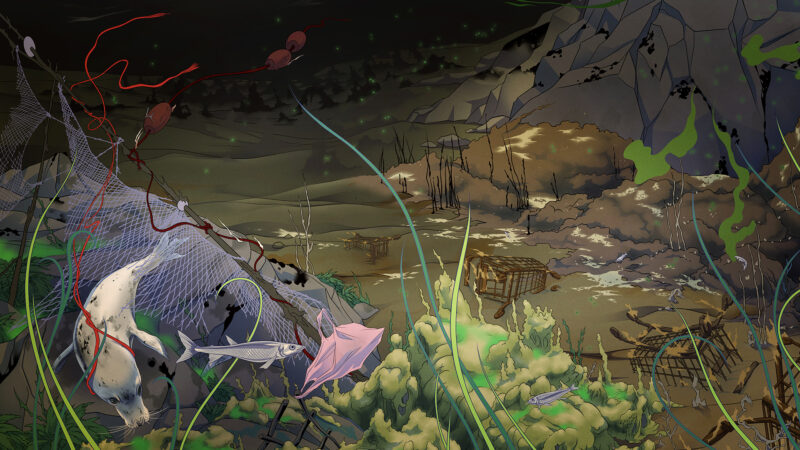
Hanging Gardens of the Baltic Sea – ghost nets that fish forever
An estimated 2,000 nets are lost in Finland’s waters alone every year, most of them made of plastic — meaning they last virtually forever.
(Photo: Pekka Tuuri)
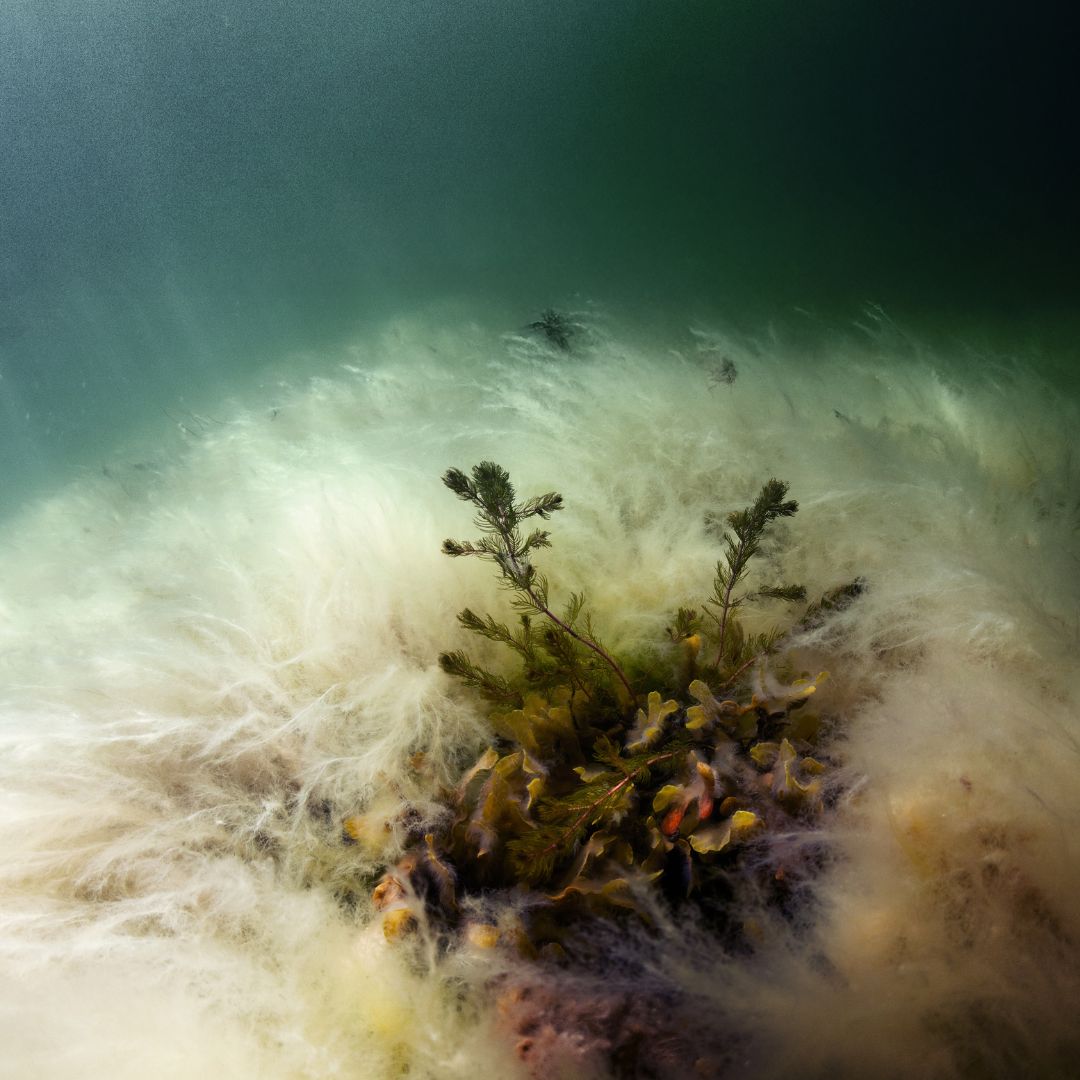
Baltic Hot Springs – the world’s fastest-warming sea
The Baltic Sea is warming rapidly, and climate change is already altering conditions in the sea.
(Photo: Pekka Tuuri)
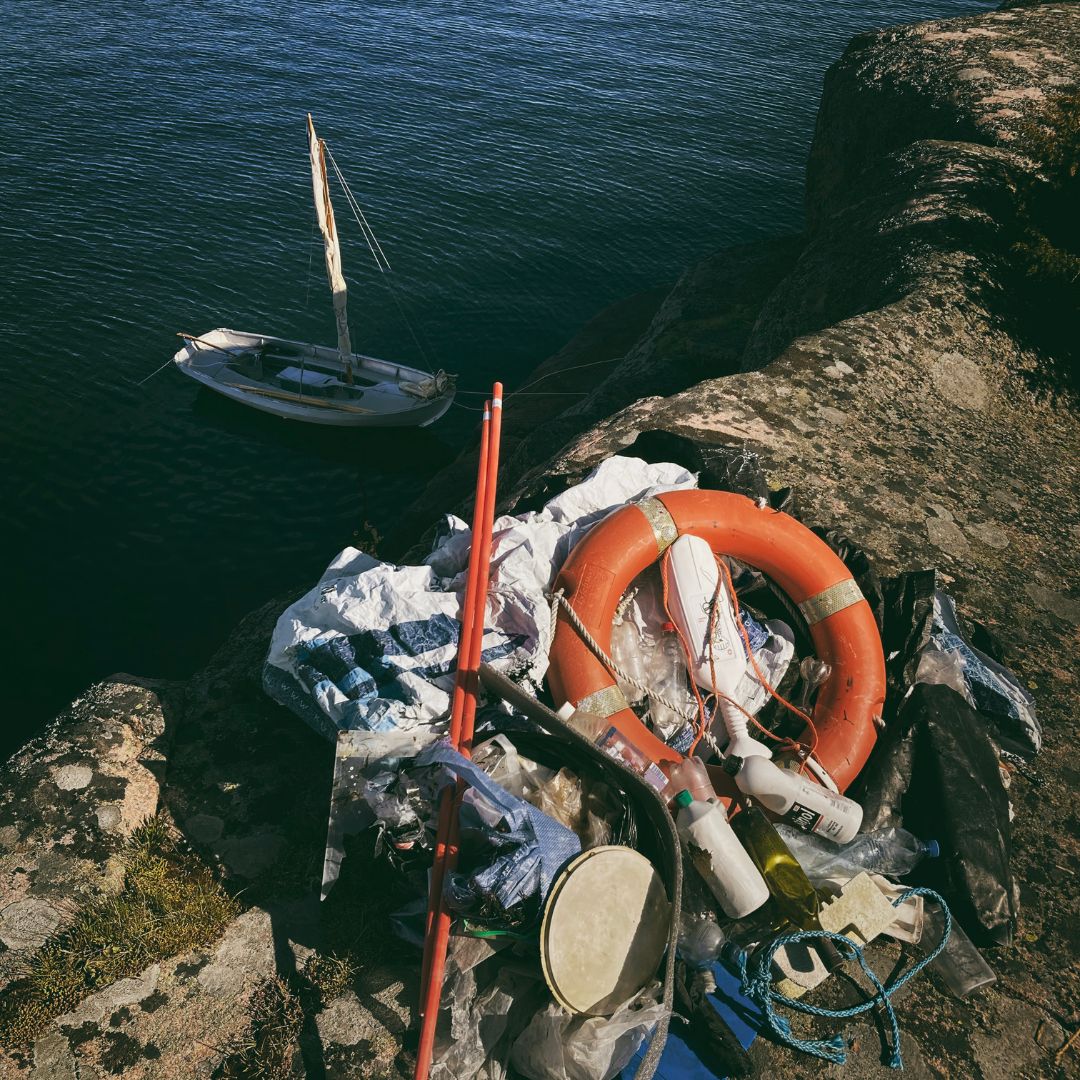
The Great Wall of Commerce – shopping trolleys, cigarette butts, and other litter entering the sea
The Baltic Sea has served as a dumping ground for all manner of waste and litter for years. Litter dropped on land near the coast reaches the sea via stormwater, rivers, and wind.
(Photo: Inkeri Pekkanen)
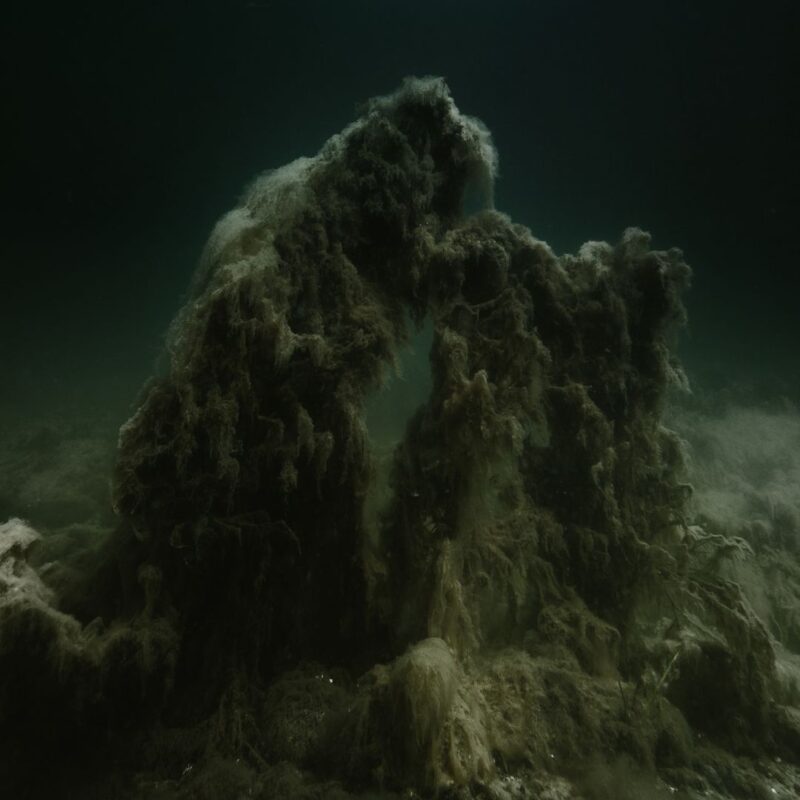
Dark Waters – the world’s most rapidly darkening sea area
Roughly one third of all forest ditches in the world have been dug in Finland. Suspended solids and humus carried from the land darken the water, reduce light penetration, and impede photosynthesis by aquatic plants and algae.
(Photo: Pekka Tuuri)