Aarreaitta – Restoring the Kanasuo peat production area to a multifunctional wetland
Restoring peat production areas into bogs and wetlands through the process of rewetting increases biodiversity and returns an area closer to its natural state. Bogs and wetlands are important habitats for many insects, reptiles and birds. They filter water and retain nutrients, and allow for the return of peat-forming flora to former peat extraction areas.



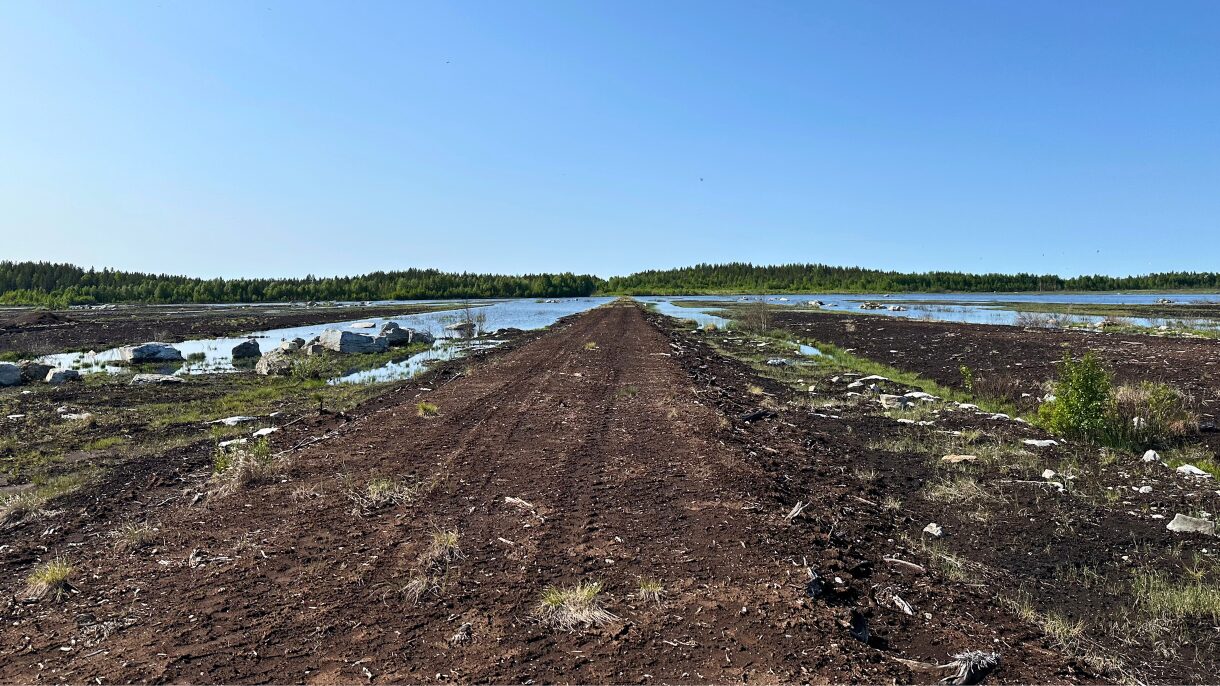
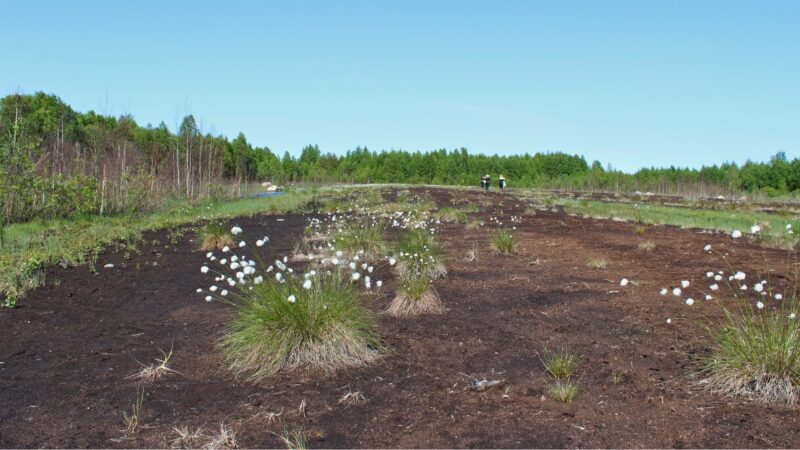
Kanasuo was originally drained for peat production. Picture: Juulia Suikula
More information:
Peat extraction areas, or peat fields, are bogs that have been drained for peat production. The drainage process causes peat to break down and release carbon dioxide into the atmosphere, which accelerates climate change. At the same time, the peat contains nutrients and humic substances that turn water brown, and these are washed into bodies of water and, ultimately, into the Baltic Sea.
This causes darkening in nearby lakes, eutrophication in coastal waters, and an increase in oxygen deficiency in the Baltic Sea. Peat extraction areas therefore pose a dual challenge: they release carbon into the atmosphere and burden waters with nutrients and humus.
When peat production stops, many areas remain dry, and peat continues to break down for decades unless the sites are restored to wetlands or bogs.
Peatland rewetting offers hope for both the climate and the Baltic Sea. If the water level of a decommissioned peat extraction area is raised, and runoff from surrounding drained forestry areas is directed to it, the bog will once again begin to function as a natural carbon store and water filter. Sphagnum mosses and other bog plants return and form a new layer of flora that binds carbon and retains water and nutrients.
Peatland rewetting reduces carbon dioxide and nitrous oxide emissions, but methane emissions increase as underwater decomposition produces methane. In the long term, however, rewetting is good for the climate.
Turning black peat extraction fields into nature’s treasure troves
The Aarreaitta (‘treasure trove’) project involves the planning and execution of the restoration of a former peat extraction area spanning 139 ha in the municipality of Muhos to a bog or wetland. The aim is to reverse the area’s development back into a peat-accumulating ecosystem, to rewet the site as extensively as possible, and to conduct runoff from nearby forestry areas to the area, if possible. Another objective is to offer new business opportunities to heavy machinery entrepreneurs as peat production declines.
Along with the restoration of the target area, the project more widely promotes the sustainable and climate-smart use of areas being phased out of peat production. We are accelerating rewetting as an established and expanding after-use practice across Finland.
The project is funded by the EU’s Just Transition Fund (JTF) and the German nature conservation organisation NABU (Naturschutzbund Deutschland e.V.).
Project implementation and results
- Restoring Kanasuo using a method that mimics the structure of the original string bog, in which water is retained in the area by means of embankments formed out of peat.
- Sphagnum moss will be reintroduced to the area through transplanting, as the methane-oxidising bacteria that live within the moss can reduce the methane emissions produced during rewetting.
- The project will draw up a practical guide compiling the principles of planning and implementing rewetting, as well as the lessons learnt from the Suokeidas and Aarreaitta projects.
- Additionally, the project will conduct a campaign to encourage peat producers to restore decommissioned areas and to commit to solutions that support biodiversity and the protection of waters.
- The project will result in the preparation of a policy recommendation that addresses the obstacles to restoration, such as gaps in expertise and a lack of financial incentives, and present solutions to remove these obstacles.
In co-operation with