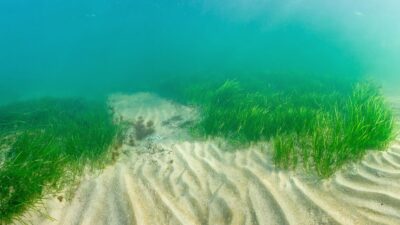
Dead seabed, eternally fishing ghost nets, and a chemical cocktail flowing into the sea – meet the Baltic Sea’s seven human-made wonders of nature
More information
In 1997, CNN popularised the Seven Natural Wonders of the World — a list that includes the Northern Lights, the Grand Canyon, and Victoria Falls. The John Nurminen Foundation is now publishing its own list for the Baltic Sea, but this time the wonders are not nature’s own. They are human-made phenomena driving biodiversity loss.
The John Nurminen Foundation, a Finnish foundation working to protect the Baltic Sea, presents seven human-made wonders of the Baltic as a counterpart to the world’s natural wonders. These are phenomena caused by human activity that drive biodiversity loss and degrade the ecological health of the sea. The full list covers algae blooms that resemble the Northern Lights, anoxic bottoms, darkening waters, eternally fishing ghost nets, the warming of sea water, marine litter, and chemical pollution.
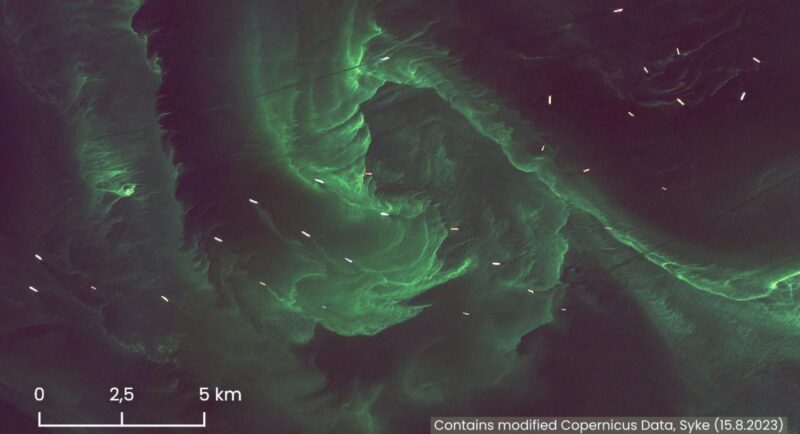
The Baltic Sea’s most severe environmental problem is eutrophication, one symptom of which is the blue-green algae blooms visible each summer. Six more human-made wonders now join these so called “Northern Plights”on the list.
The EU Nature Restoration Law makes Baltic Sea biodiversity loss an urgent policy issue as well. The law aims to halt biodiversity loss and improve the state of nature across the EU. Finland has until September to prepare its draft national restoration plan for submission to the European Commission.
“Biodiversity loss is proceeding along the Baltic coastline, both in coastal habitats and below the surface. We are witnessing a rapid change in the entire marine ecosystem, and if we want to improve the state of the Baltic Sea, we must act quickly. Reducing eutrophication is the most significant concrete action we can take, but we can also support biodiversity by restoring habitats and species,” says Miina Mäki, Head of Programme, Healthy Marine Ecosystem at John Nurminen Foundation.
“We wanted to make the Baltic Sea’s problems visible in a way that stops people in their tracks without lecturing them. These are not wonders to be admired. They are human-made phenomena that we should not accept as a normal part of the sea,” says Johanna Suni, Communications Manager at John Nurminen Foundation.
Biodiversity loss and the human-caused changes affecting the Baltic Sea are also explored in a new season of the Foundation’s M/S Baltic Sea podcast. The episodes examine why biodiversity loss is proceeding, how the Baltic wonders came about, and what can be done about them.
The Baltic Sea’s Seven Human-Made Wonders of Nature
Northern Plights – algae blooms that resemble the Northern Lights
The Baltic’s own “northern plights” can look like the Aurora Borealis when photographed from above, but in reality these algae blooms signal eutrophication. Excess nutrients — from agriculture and forestry, among other sources — enter the sea and fuel algal growth, destabilising the entire ecosystem. Eutrophication manifests in blue-green algae blooms, but its effects extend to the seabed and coastal habitats as well. When algal mass sinks to the bottom, its decomposition consumes oxygen.
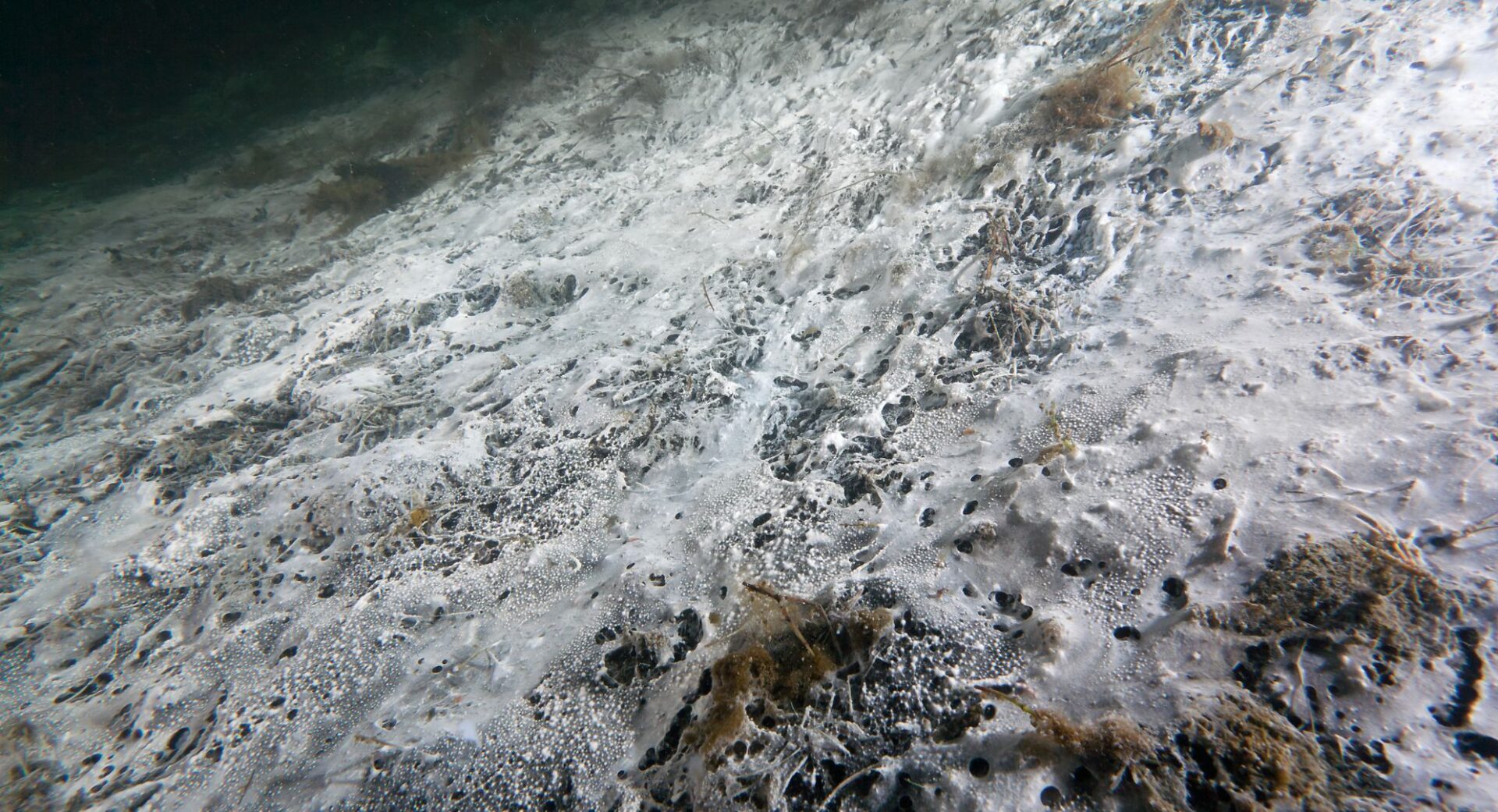
Rock Bottom – an anoxic area the size of Denmark on the seabed
The deep basins of the Baltic Sea experience recurring oxygen depletion, made worse by eutrophication. Practically nothing can survive on an oxygen-depleted seabed. Bottom-dwelling organisms die and fish lose their habitats. Oxygen-depleted seabeds can also release phosphorus back into the water, further fuelling eutrophication.
According to a modelling study by Stockholm University’s Baltic Sea Centre published in 2024, the Baltic’s completely anoxic bottom areas would be more than 80 percent larger than they are today had nutrient loading not been reduced since the 1980s. Even so, the Baltic Sea still suffers from extensive oxygen-depleted areas on the seabed, the largest of which is the size of Denmark.
Dark Waters – the world’s most rapidly darkening sea area
Finns have excelled in one particular field: digging drainage ditches. Roughly one third of all forest ditches in the world have been dug in Finland — nearly 1.5 million kilometres in total. This shows in our waters. Suspended solids and humus carried from the land darken the water, reduce light penetration, and impede photosynthesis by aquatic plants and algae.
According to a study published in Global Change Biology in 2025, the world’s seas have darkened over recent decades. In the study’s satellite data, the Gulf of Bothnia stood out as the most rapidly darkening sea area in the world — the only sea area where light penetration had declined across more than half of its total surface area.
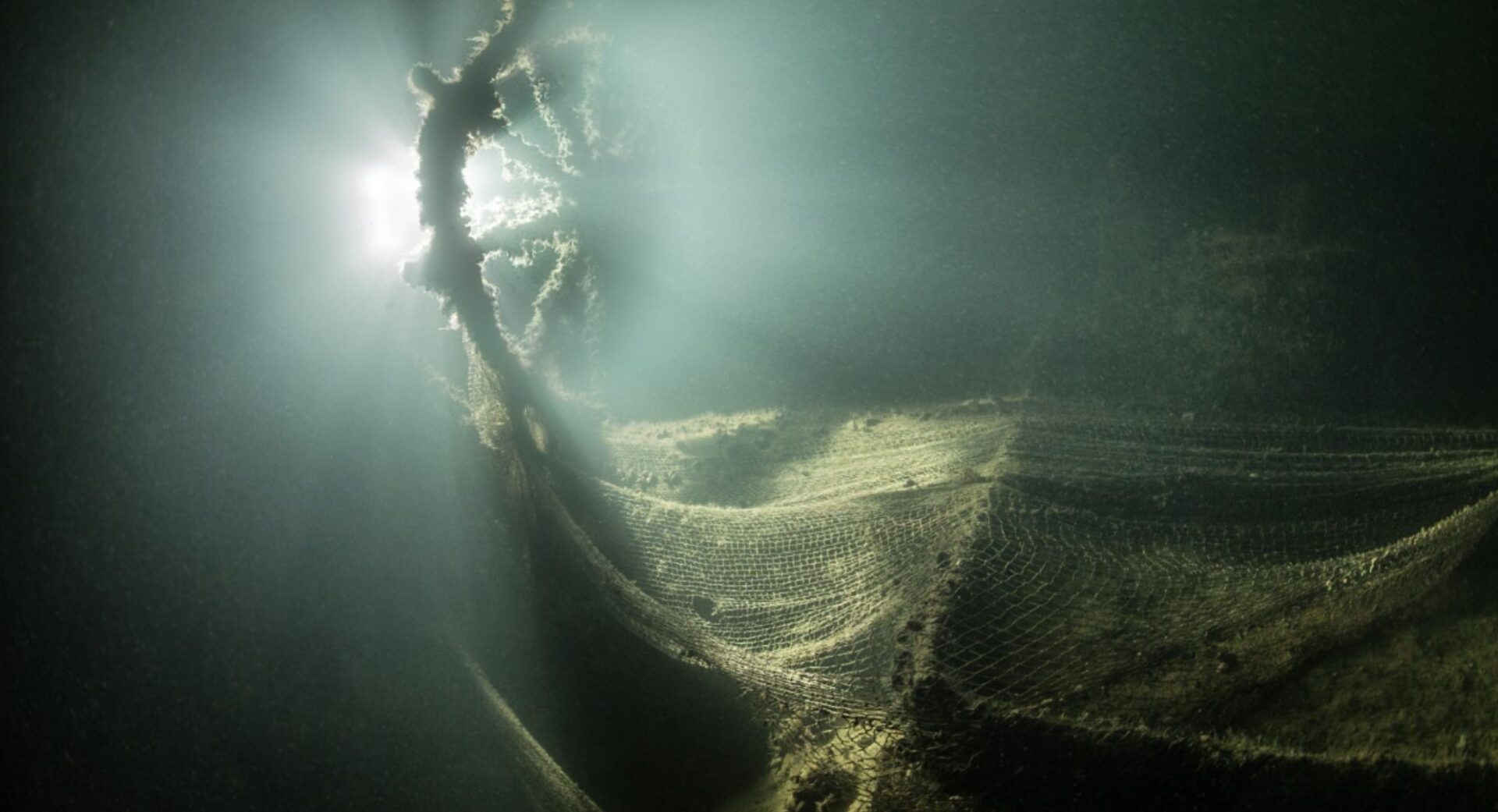
Hanging Gardens of the Baltic Sea – ghost nets that fish forever
Humans have managed to create a fishing device that can continue catching fish for years after it has been abandoned or lost at sea. An estimated 2,000 nets are lost in Finland’s waters alone every year, most of them made of plastic — meaning they last virtually forever.
During the Finnish Environment Institute’s Re:Fish project, nearly nine kilometres of ghost nets were retrieved from the coasts of Finland, Sweden, and Estonia over two summers — even though the cleaned area represented only a fraction of the Baltic seabed. The nets contained live and dead fish as well as bird bones, and some had been on the seabed for decades.
Baltic Hot Springs – the world’s fastest-warming sea
The Baltic Sea is warming rapidly, and climate change is already altering conditions in the sea. Warming water affects species, ice cover, oxygen levels, and algae blooms. The Baltic warms faster than other seas because it is shallow and almost completely enclosed, and located in the far north, making it particularly sensitive to change.
The Great Wall of Commerce – shopping trolleys, cigarette butts, and other litter entering the sea
The Baltic Sea has served as a dumping ground for all manner of waste and litter for years. An estimated 2.2 billion cigarette butts are discarded into the Finnish environment every year, and butts are made of plastic. Litter dropped on land near the coast reaches the sea via stormwater, rivers, and wind. Litter is also thrown directly into the Baltic from ships: shopping trolleys, expired medicines, clothing, plastic bottles, and beer cans, among other items.
Chemical Falls – mereen valutettava kemikaalicocktail
Mereen päätyy ihmisten toimesta haitallisia ja myrkyllisiä aineita esimerkiksi meriliikenteestä, satamista, teollisuudesta, torjunta-aineista ja jätevesistä. Alusten tankkien pesuvesien mukana voi päätyä Itämereen kerralla jopa satoja tai tuhansia litroja vaarallisia kemikaaleja. Kemikaalit eivät muodosta näkyvää putousta, mutta niiden vaikutukset voivat kertyä eliöihin, kulkeutua ravintoketjussa ja säilyä meressä pitkään.